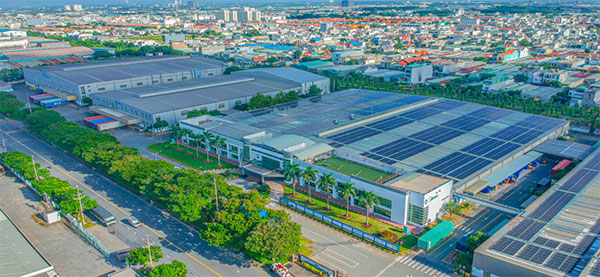

Core assessment: In the fall of 2026, American industry is undergoing a critical transition from “policy pronouncements” to “physical investment landing.” The grand opening of the International Manufacturing Technology Show (IMTS) in Chicago and Ford’s additional $1 billion investment in its Kentucky plant serve as the most direct evidence of this shift.
IMTS 2026: The Most “Reshoring”-Charged Edition in Nearly Eight Decades of History
On September 14, the International Manufacturing Technology Show (IMTS)—the largest manufacturing technology exhibition in the Western Hemisphere—opened at McCormick Place in Chicago. Data released by the show’s organizer, the Association for Manufacturing Technology (AMT), shows that this year’s event attracted 1,788 exhibiting companies, of which 400 are first-time exhibitors, with 1.17 million square feet of exhibition space and more than 90,000 registered attendees, including approximately 15,000 students.
AMT President Douglas Woods said directly at the opening ceremony: “America has rediscovered a fundamental economic truth: ultimately, a nation creates value by making, mining, or growing things here at home, and all three depend on manufacturing.”
This is not empty rhetoric. On the show floor, artificial intelligence, automation, robotics, additive manufacturing, metrology, and machining technologies are integrated into systemic solutions rather than displayed as isolated products. Registrants from all 50 states and 113 countries cover key sectors including defense, aerospace, automotive, medical, semiconductors, and AI infrastructure (data centers).
More telling are the market data. According to the U.S. Manufacturing Technology Orders report released by AMT on the eve of the show, new orders for metalworking machinery reached $605.8 million in July 2026**, with cumulative orders through July totaling **$4.03 billion, up 37.1% year-over-year. This marks only the second time since records began in 1998 that order values have exceeded $500 million for five consecutive months.
Ford Doubles Down on Kentucky: $1 Billion for “America’s Largest Plant”
Four days before IMTS opened, Ford Motor Company announced a specific and tangible industrial investment: $1 billion to build a new advanced paint shop at its Kentucky Truck Plant in Louisville, Kentucky, replacing the existing facility, with construction expected to begin before the end of 2026.
The Kentucky Truck Plant is Ford’s largest and highest-revenue manufacturing facility in the United States, primarily producing F-Series Super Duty pickups as well as the Expedition and Lincoln Navigator. The paint shop upgrade is directly tied to capacity and quality—this is the manufacturing foundation of Ford’s F-Series profit engine.
This investment echoes broader macro trends. U.S. manufacturing activity has expanded for eight consecutive months, with the August ISM Manufacturing PMI registering 54.6%. In the first quarter of 2026, manufacturing contributed to the U.S. economy at an annualized scale of $3 trillion, employing nearly 12.6 million workers.
The True Scale of “Reshoring”: 338,000 Jobs and $11 Trillion in Commitments
Investment data tracked by the White House shows that announced U.S. investment commitments by American and foreign companies total $11 trillion. Harry Moser, founder of the Reshoring Initiative, noted that announced reshoring and foreign direct investment jobs for 2026 alone are projected to reach nearly a record 338,000.
Productivity data also supports the “quality growth” narrative. According to the U.S. Bureau of Labor Statistics, manufacturing labor productivity grew 2.4% in the second quarter of 2026, with output rising 5.4%. Durable goods manufacturing performed even more strongly, with productivity up 3.6% and output up 7.3%. Unit labor costs fell 0.3%, meaning productivity gains partially offset pressure from rising hourly wages.
Moser also offered a sobering reference point: to balance the U.S. $1.3 trillion goods trade deficit, manufacturing would need to grow 40%, accompanied by substantial gains in investment and productivity.
Where Political Narrative Meets Industrial Reality
House Speaker Mike Johnson’s remarks around Labor Day directly attributed this round of industrial investment to Republican policies. He claimed on social media that “American manufacturing is booming,” citing indicators such as “a million private-sector jobs” and “trillions of dollars in investment flowing into the United States.” Treasury Secretary Scott Bessent stated that factory-related construction job growth has been “10 times” that of the previous administration.
Objectively, the acceleration in industrial investment is indeed occurring within a specific policy window. But the technological density on display at IMTS—AI-driven robotic 3D printing, rapid production systems for drones and aircraft designed for defense applications, and the Navy’s expanded investment in additive manufacturing—indicates that corporate decision-making logic revolves more around supply chain resilience, technological competitiveness, and the economics of near-shoring/on-shoring than around any single political cycle.
Ground-Level Perspective: Who Is Actually Benefiting
For readers tracking U.S. industrial developments, this year’s IMTS and Ford’s investment convey three verifiable signals:
First, order data outperforms emotional narratives. Metalworking machinery orders exceeding $500 million for five consecutive months represent the hardest form of “voting with your feet” at the equipment level.
Second, investment is concentrated in “bottleneck segments.” Ford’s $1 billion going to a paint shop rather than an entirely new plant indicates that quality and efficiency upgrades of existing capacity are the current priority, rather than pure expansion.
Third, talent is the hidden constraint. The participation of approximately 15,000 students among IMTS registrants, along with the show’s dedicated “Next-Generation Education” programming, points to a problem that has been widely discussed but not yet solved: where will the skilled workers for reshored manufacturing come from?
IMTS 2026 runs through September 19. During the show, more than 50 main-stage sessions will feature the U.S. Department of Defense’s submarine program leadership, Oak Ridge and Sandia National Laboratories, Lockheed Martin, Siemens, Microsoft, and Google Cloud, among other institutions and companies, addressing topics including the defense industrial base, AI and automation, and aerospace growth. For those observing America’s “reindustrialization” process, this week in Chicago carries more information density than any policy document.